



the conflict of the cross
There is a temptation to make the cross “safer.” To merely make it a “symbol.”
To reduce it to a reminder of only our individual salvation.
To shrink it into jewelry that we wear.
To frame it beautifully in stained glass.
But the cross was never a symbol. And there is certainly nothing about crucifixion that is safe.
It was Rome’s billboard of compliance. Their social media ad about law and order.
In the first century, crucifixion was not simply a form of execution. It was political theater. It was a blatant warning. It was a message broadcast with wood and nails, with flesh and blood.
This is what happens when you challenge the empire. When you don’t “fall in line.” When you are labeled a domestic terrorist.
Jesus was not crucified simply for being too nice. For healing too many people. For breaking “social norms.” For advocating for the vulnerable.
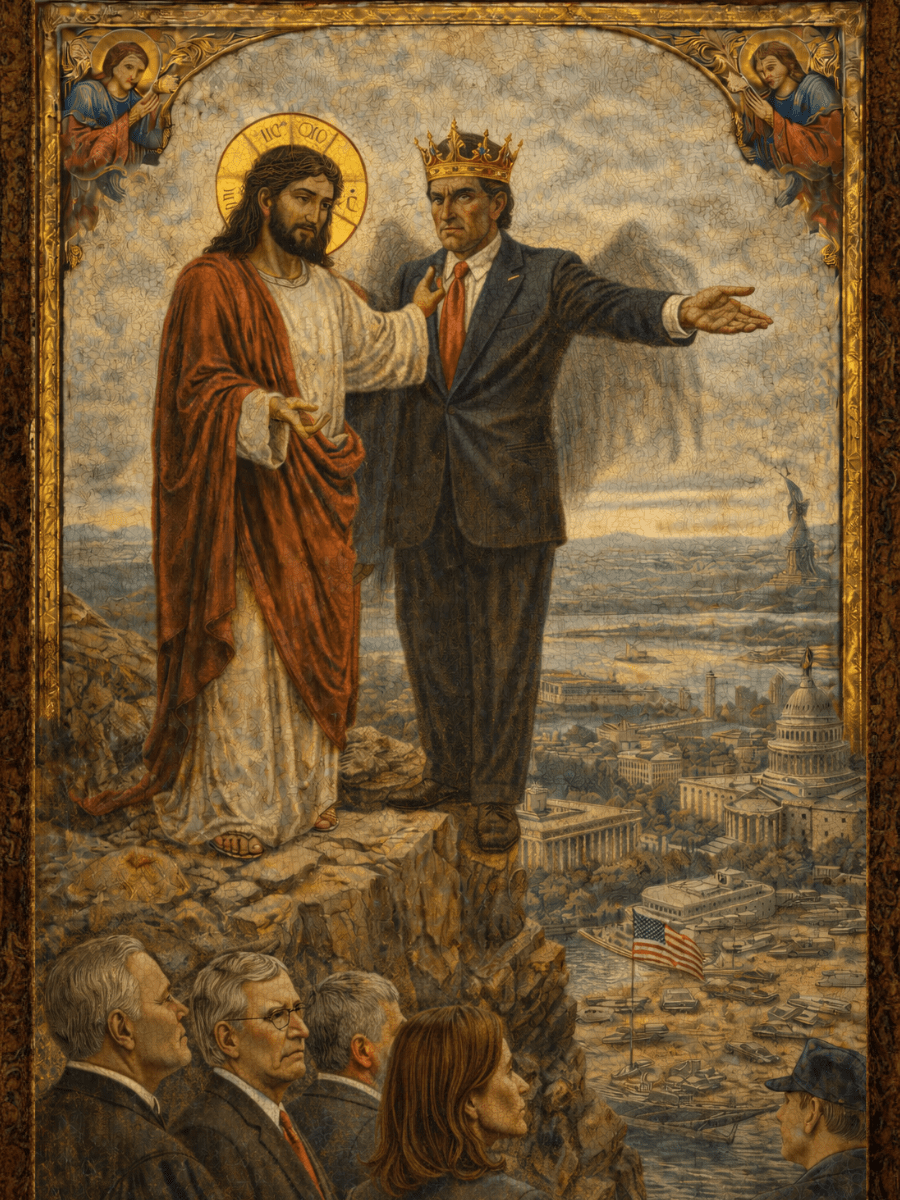
He was crucified because His declaration that “the Kingdom of God is at hand” is a direct threat to every earthly empire. Even those who claim to be on the side of God’s people…
That is why the cross should confronts us so sharply.
Jesus, the very son of God, hangs on a cross, crowned with thorns, blood dripping down his body, as he’s gasping for air. Forced to die an excruciating death surrounded by the guardians of the empire.
The cross is not trapped in history. The empire ridding itself of those who challenge its exclusive authority is not a lesson of the past.
It is a pattern of how all earthly empires work. Generation after generation. Aligned with “Christian institutions” or not.
The empire’s way of ruling over humanity is in direct conflict with the identity of the Kingdom of God.
the cross is political
In the Gospels, Jesus speaks of good news for the poor, freedom for captives, release for the oppressed. He touches lepers. He eats with outcasts. He calls out religious hypocrisy. He exposes economic exploitation in the temple. He refuses to baptize violence in the name of God.
And what was the solution by those in power to this disruption?
The use of a state-sanctioned show of force.
Religious leaders and the empire colluded to make it happen. Fear and power aligned their goals. Stability was preserved. The troublemaker was silenced.
God’s own people and political leaders played a key role in silencing the son of God. In working against the ways of His Kingdom. In putting an end to the disruption of His ways.
Whenever the Kingdom of God breaks into this world, the empires and the systems that profit from fear and total allegiance react boldly.
The cross displays what empires do when they feel threatened.
They crucify.
where god stands
The revelation of the cross though is not actually about what the empire does. That is expected if we look at the history of humanity.
But what the cross ultimately shows us is where God stands when the choice is between the empire and His Kingdom.
God does not stand with the war mongers.
God does not wield weapons of mass destruction.
God does not draft policies that dehumanize others.
God does not side with those who use politics and wealth to exploit.
God stands with the oppressed. With the vulnerable. With the victims.
This is one of the main scandals of Christianity: that the Creator of the universe identifies not with strength but with suffering. Not with systems of control but with the bodies being broken by them.
Jesus said, “Whatever you did to the least of these, you did to me.” That is not metaphor. It is incarnation.
The crucified Christ is present wherever people are being crushed by empires.
Where families are displaced.
Where policies erase dignity.
Where bombs fall and mothers weep.
Where fellow humans are imprisoned behind walls and fences.
Where fear is weaponized for political gain.
When the world shows us all the evil that is possible when men wield their power for their own sinful ambitions, the cross tells us where God is standing. And who God is standing with.
the temptation of comfortable faith
There is a version of faith that reveres the cross but resists its implications.
It sings about Calvary but avoids confronting the injustices that caused the crucifixion.
It preaches forgiveness but is silent about the harm that requires people to forgive.
It worships loudly on Sunday and ignores suffering on Monday.
That kind of faith is tidy.
It is manageable.
And it never makes those in power uncomfortable.
But the path of the cross does not allow for a comfortable faith.
Jesus is not neutral. The cross is not bipartisan and it is not apolitical either. It exposes violence wherever it exists. It critiques oppression wherever it operates. It calls into question every allegiance that requires dehumanization.
The question is not, “Which side are you on?”
The question is, “Where is Christ?”
And the answer is painfully consistent.
Christ is with the crucified.
the mirror of the cross
The story of the crucifixion is meant to hold up a mirror to our participation in the systems of this world.
Because the truth is, the crowd that day believed it was justified. The soldiers were following orders. The leaders were enacting the law. The system was preserving peace.
No one wakes up thinking, Today I will participate in the crucifixion of God.
And yet, they did.
The cross forces an uncomfortable reflection:
Where have we mistaken security for righteousness?
Where have we baptized fear as wisdom?
Where have we ignored suffering because it was politically inconvenient?
Empire always believes power is necessary.
Kingdom always looks like going to the cross.
And yet, in the end, the Kingdom wins.
The way of the cross leads to resurrection.
love that absorbs violence
Here is a paradox at the center of Jesus’ crucifixion story:
God’s people, with the help of the empire, believed they were ending a threat to their existence.
Instead, what was revealed was their own empty idolatry.
Jesus did not call down legions of angels (though He could have).
He did not respond with violence toward their violence.
He absorbed it.
That is not passivity.
That is confrontation at the deepest level.
The cross unmasks the empire’s power by refusing to mimic it.
And three days later, the resurrection answered the empire’s power of violence with something it could not manufacture: the Kingdom’s power of new life.
good friday comes first
We are not at resurrection yet in this movement.
We are still standing in the shadow of the cross.
We should not rush past it. We should not sanitize it. We should not symbolize it.
The entire week leading up to Easter, but especially Good Friday is not a sentimental moment. It is an exposure. It is a reckoning. It is a revelation of how the world maintains control and how God subverts it.
Before glory, there is crucifixion.
Before triumph, there is suffering.
Before resurrection, there is confrontation.
And the cross still speaks these truths today.
It speaks to governments.
It speaks to churches.
It speaks to us.
It asks:
Will you align with the empire’s power that crucifies the other or with God’s love that absorbs hate?
Will you protect a politicized version of faith or stand in costly solidarity with a subversive Savior?
Will you bow down to nationalistic symbols of safety or follow a crucified King?
And so this is where the season of Lent leads us – to the foot of the cross.
A place that’s uncomfortable and unsafe.
A story that exposes idolatry.
A person that invites us to follow His ways.
Because resurrection can come.
But first, we must decide where we stand. And if we stand with Him, we will end up at the cross ourselves. Usually at the very hands of those who most ardently say they’re the ones on God’s side…
*This blog is a part of a series of Lenten reflections. I encourage you to go back and start with the Ash Wednesday reflection for context if this is the first one you’ve read.




Add Comment